The DECRUSTATES Nomadic Art Production and its Traveling Exhibition will start in 2015, the UN
‚International Year of Soils‘.
It aims to gain ground worldwide to prepare it for
public dialogue in urban spaces.
To co-finance ORIGIN find DECRUSTATES 2015
on special sale.
There is lots to do to make this traveling exhibition become reality: if you like to get involved, please contact me!
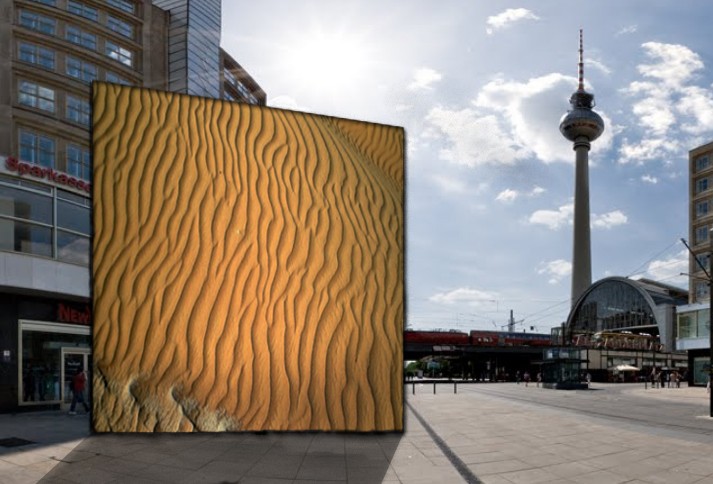
‚Soil is a complex natural resource of fundamental significance to life, so essential and so obvious that it is the most overlooked element of the environment.‘
European Soil Charter, 2003
Abstract
The global project ORIGIN produces large DECRUSTATES in various biospheres of the planet for on-site exhibitions. Five DECRUSTATES of 5 x 5 meters each are exhibited in public, urban places to draw attention towards the origin of our existence. The selection of the specific earth surfaces and topics is made through interdisciplinary cooperation with local artists of the respective countries hosting the exhibition. It mirrors local peoples‘ histories connected to their ground. The artists are asked to produce own works to be exhibited alongside the chosen DECRUSTATES to further spark local communication.
ORIGIN is presented in three different exhibition phases:
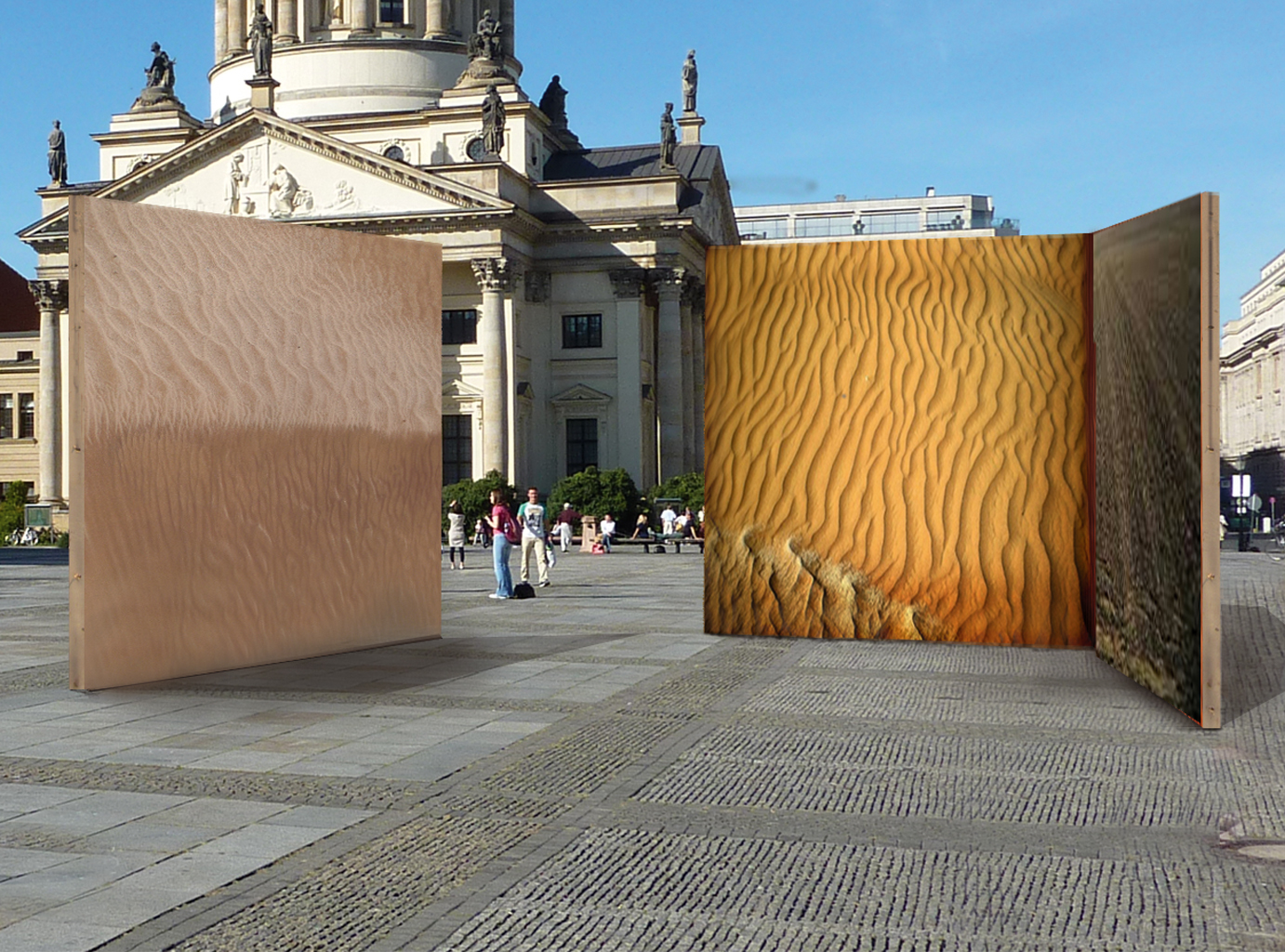
In the beginning the DECRUSTATES are shown as billboards drawing most public attention. They then come together as a stage allowing interdisciplinary art performances. At last they will form a cube, the ROOM of ORIGIN (details see below).
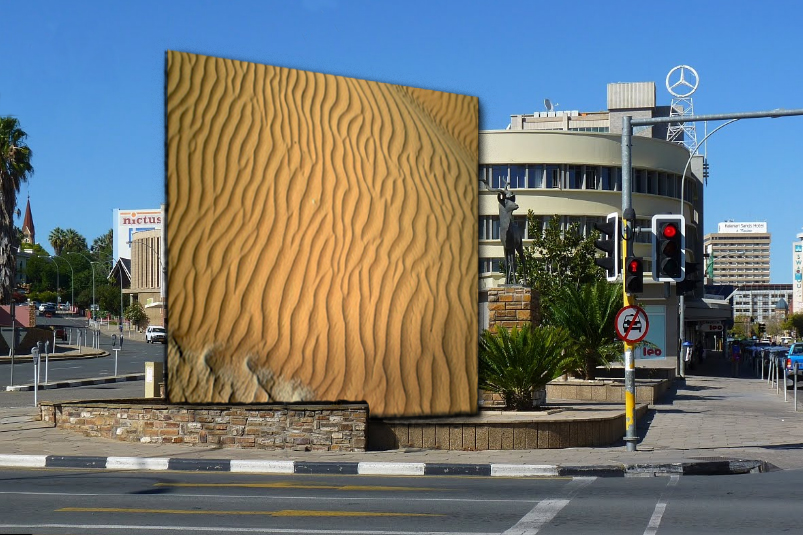
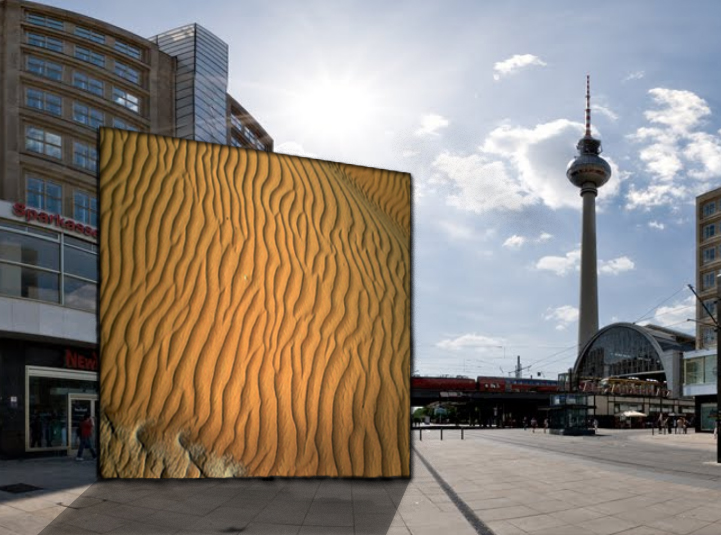
The first set of works for ORIGIN will be produced in the arid regions of Namibia and shown in the capital of Windhoek. Next host will be its town partner Berlin, Germany. DECRUSTATION in and around Berlin will add regional relevance to the exhibition. The project will then continue following international invitations with an open end. Continuous DECRUSTATION will complement the global collection of local soils. To the same time knowledge transfer of the DECRUSTATION technique will initiate a worldwide open source art project. ORIGIN endorses the Earth Charter as its ethical framework. Patronage was offered by the UNCCD. The start of ORIGIN is well chosen: in 2015 the United Nations celebrate the ‚International Year of Soils‘.
The three Exhibition Phases of ORIGIN: from Exposure in the Open Public to Private Contemplation
First Exhibition Phase: the Billboards
The five ORIGIN DECRUSTATES stand separately like billboards in the deliberate context of advertisement in public open spaces. Earth itself in the context of omnipotent advertisement will draw most public attention possible. The objects will raise questions and leave room for imagination. Action and reactions of the public will be taken up and responded to by artists present at the scenes.
Second Exhibition Phase: the Stage
The DECRUSTATES are now brought closer together in a decelerated
theatrical performance towards a central public place to form the STAGE OF ORIGIN. Here they start communicating with each other and offer room for more concentration and stimulate action: interdisciplinary collaborations like performance, music, dance, theatre, film, readings and discussions are possible.
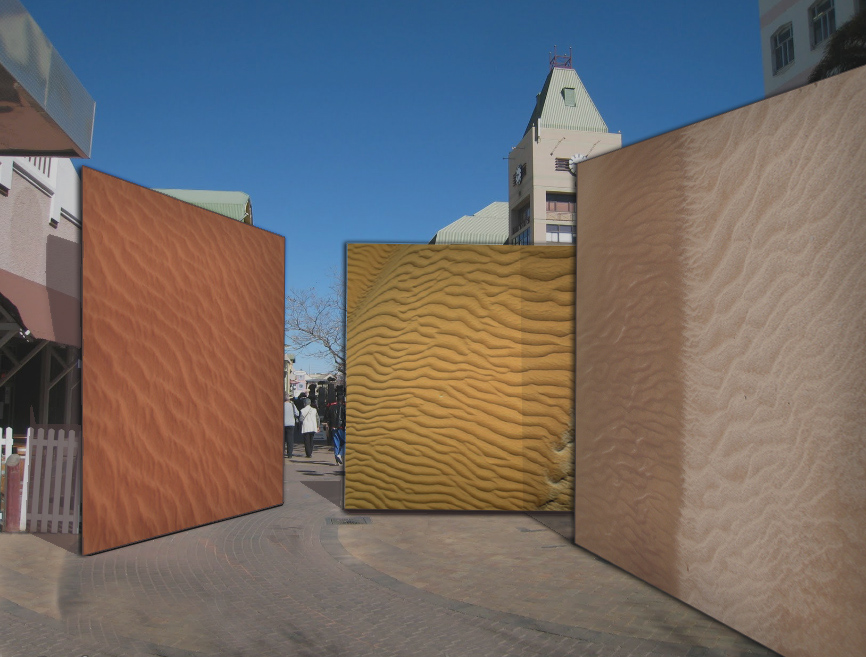
The Third Exhibition Phase: as Room
At last the DECRUSTATES are brought together to form a self-containing cube, the ROOM OF ORIGIN. High concentration and contemplation is possible.
All three phases can also take place inside public buildings, like
railway stations or town halls. 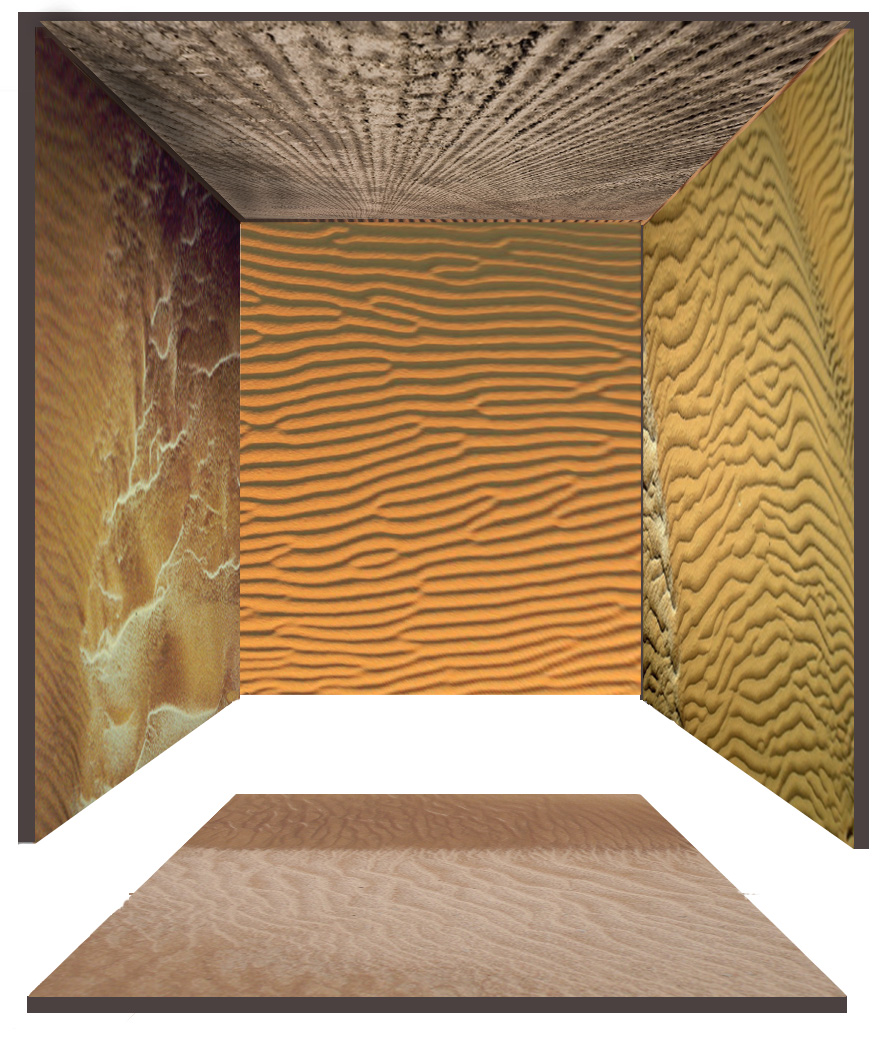
To support ORIGIN please go to DECRUSTATES 2015. This special edition will co-finance the traveling exhibition and production.
Or contact me: there are many ways to get involved and crowd funding/sourcing is the way to go for this project!
United Soils of Europe
Soil is Active
Soil is Soul
Held in High Esteem by People, Art and Science
| Proposal Title |
| United Soils of Europe |
| Proposal Acronym |
| USE |
| SOILSCAPE FSTP | Soil Orchestra FSP | ||||
| Strand | Soil Orchestra | Activity category | |||
| Strand 1: Innovative communication campaign | ☐ | Italy | Workshop lab tools | ☐ | |
| Educational video game | ☐ | ||||
| Artistic Performance | ☐ | ||||
| Strand 2: Artistic/arts-based soil activities | x | Germany | Stage performance | ☐ | |
| Visual arts exhibition | ☐ | ||||
| Hidden world of soil film | ☐ | ||||
| Strand 3: Participatory methodologies for engaging citizens | ☐ | Poland | Stage performance | ☐ | |
| Visual arts exhibition | ☐ | ||||
| Workshop | ☐ | ||||
| Scale | France | Festival animation | ☐ | ||
| Local | ☐ | Bulgaria | Festival animation | ☐ | |
| National | x | Finland | Artistic ambassador | ☐ | |
| Transnational | ☐ | Switzerland | Visual arts exhibition | ☐ | |
| Duration | Educational video game | ☐ | |||
| 6 months | ☐ | Soil inspired film | ☐ | ||
| 12 months | ☐ | Portugal | Festival animation | ☐ | |
| 18 months | x | ||||
Motivational statement
| My connection to soil started in my childhood healing my hands in compost. In art academy, I worked with earth and began land art. My professional life started as scientific assistant and drawer in the Namib desert. With nature as my best teacher, connecting to the ground, my senses developed. Soil became my second protective skin layer and my body learned to walk gently. I consequently started my technique of Decrustation. Humbled by deserts, I place natural earth creations above my human creation as artist. My life’s concentration on working with Decrustates and the connection of people to their soils worldwide brought never-ending life lessons on the myriad ways soil impacts our existence. I became human by knowing my origin. Understanding the potential of my artwork, the necessity of cooperation and the challenge to communicate the all-embracing soil topics, I designed a Decrustate concept in 2015 for a Soil Festival. USE is based on this concept and is dedicated to the Soul Man. |
Executive Summary
| USE is a mobile, urban installation of five original soil objects called Decrustates, each 3m x 3m in size. Their natural origin is selected according to scientific criteria to best represent the aims of “A Soil Deal for Europe”. USE Decrustates create highest public visibility, interest and awareness for their society-related soil topics. Being light and flexible, single Decrustates become alive by performing artist involving the public in choreographed movements through town. Coming together at a central place, they form the USE installation. We see USE shown at documenta 16 in Kassel being an art show of great importance and radiance worldwide. We want to cooperate with the German Soilscape Festival in 2027 and the other European festivals being able to offer a concentrated space or an inherent stage for public soil awareness where all planned activities can come together for soil and its people. |
Applicants’ details
Partner 1
| Organisation name | Decrustate Collective | |
| Country | Germany | |
| Full address | Decrustate Gallery, Kopenhagener Str. 29A, 10437 Berlin | |
| VAT1 number or equivalent | DE274396642 | |
| Type of partner | Artistic/creative industry | x |
| Soil science | ☐ | |
| Other- please specify | ☐ | |
| Legal representative | Anneliese Ketterer | |
| Contact person | Anneliese Ketterer | |
| Email of contact person | info@decrustate.net | |
| Phone number of contact person | 00 49 176 207 217 32 | |
Partner 2
| Organisation name | MS Schrittmacher-Landgang e.V. | |
| Country | Germany | |
| Full address | Solikanter Dorfstr. 25, 15324 Letschin | |
| VAT number or equivalent | Finanzamt Strausberg 064/141/00048 | |
| Type of partner | Artistic/creative industry | x |
| Soil science | ☐ | |
| Other-please specify | ☐ | |
| Legal representative | Martin Stiefermann | |
| Contact person | Martin Stiefermann | |
| Email of contact person | vorstand@msschrittmacher.de | |
| Phone number of contact person | 0049 170 233 400 8 | |
Partner 3
2.1 Context and relevance
How does soil inspire the creative and/or participatory approach of your proposed project?
Nature itself is the best teacher. And soil its most diverse and creative material.
Understanding this as artist, I started my very own technique to fix earth surfaces worldwide in their original, highly aesthetic form and various qualities on-site. After the drying process I am able to remove them from their place of origin. De-Contextualization enables me to re-contextualize soil into the realm of art. The works I called Decrustates (from decrustare, lat. for peeling). The innovative technique I have been developing since 2000 I call Decrustation. Decrustates are millimetre thin, unchanged crusts of earth up to 30 m² in size, conceptually and situationally selected in deserts, fields, cities or industrial sites around the world. They are representatives of the origin visualising the impact of human interaction. The skin of earth is mobilised, elevated and brought to eye level as objets trouvés in exhibitions and urban performances. Changing perspectives triggers new learning processes. Decrustates are messengers we humans understand and relate to and mirrors we are able to see ourselves in. With all details intact, from colour to relief, Decrustates surprise through their materiality and authenticity. They speak a universal language all people, being of earth, deeply understand. Their intriguing and mysterious aesthetics reach far and deep. I place each grain of sand or a crumble of soil verse a pixel and AI. Decrustates are visual and haptic as well as ethical communication tools of universal truth.
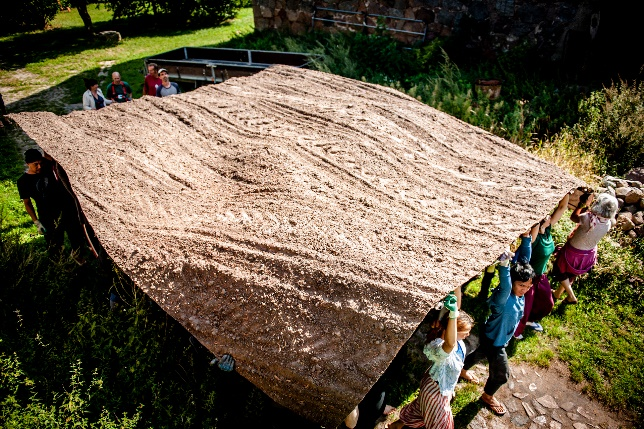
We propose a mobile, urban installation of five Decrustates, each 3m x 3m in size. The installation creates highest visibility and attention and becomes alive by performing artist lifting and moving the installation through the public sphere. The choreographed performance incorporates several stages communicating with the public: First, they will be presented individually in different locations around the city. To lift and move the soils, performing artists engage the public and build bridges of understanding and knowledge to the soil topics they represent.
Humans act as protectors and communicators of their soils: they carry soils in their hands. Within a choreographed deceleration performance, the artists then move their respective soils very slowly through town towards each other to finally meet at a central location. This slow movement again leaves space to interact with the audiences, involving them in carrying and caring. The focus lies on soil becoming an active participant in the performance reflecting the active role soil has within its natural and in the human context.
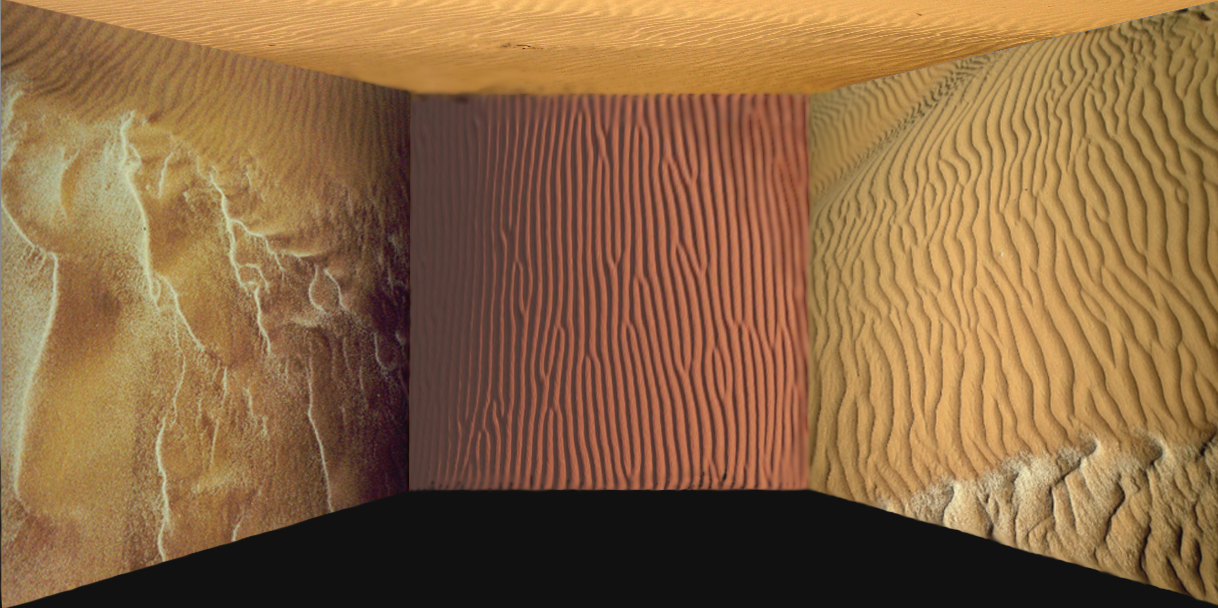
Arriving at a central location, they are brought together to form the USE installation, a more concentrated space or platform for other soil activities. A pentalogx of soils, an artwork consisting of five parts, or a cube allow for higher concentration.
Photo Montage, USE Room, frog’s eye perspective
In all stages of the USE installation and performance, soil-related activities planned for the proposed German Soil Festival in 2027 can take place in and around USE, facilitating all trans-cultural, interdisciplinary, participatory projects and local/regional initiatives.
Explain why soil awareness is critical, using data or examples to emphasize its connection to human well-being.
The relationship of humans to their origin, to soil, is so fundamental that even the Latin word stem ‘humus’ gives us humans our place in nature. We are of earth and therefore need to feel and be connected to it. The fundamental role of soil is also visible in the origin of the word ‘culture’. We cultivate the soil to feed our population. In human cultures, we develop and nurture ethical values to foster stronger social cohesion. Cultures are significantly bound to the ground on which they develop. In urban societies traditional, physical and spiritual connections to the soil are fading and it seems enormously difficult to direct societal attention to the fundamental importance of earth matter: soil attracts less attention than any other global challenge but it has the most crucial ecosocial impact. World-wide we are loosing billions of tons of this fertile, limited resource alone due to soil erosion or degradation. We need healthy soils for food security, resilience to climate change and biodiversity. Without diversity of soils there is no biodiversity, but 60 – 70 % of European soils are damaged in their functions. It is difficult to emotionally come close to soil for it has no ‘cuddling’ factor. Soil is all too common and its pollution difficult to detect. It is unknown territory, cold and dark. It only comes to shine as privately owned property, as financial investment or speculative object. Thus it plays the key-role in property taxation, in economics, globalisation and wars. On a larger scale it is therefore difficult to protect it and its creatures from exploitation. Problematic results are manifold: from unsustainable mineral extraction to industrial farming and food production methods: we globally take too much and generally give too little.
Explicitly explain how the proposal meets the call’s requirements and objectives. Which of the Soil Mission priorities does the proposal address?
We are aiming to increase soil literacy though USE transdisciplinary approach. Our consortium consisting of a fine artist, a performing artists and a soil scientist is the perfect starting point to our project’s development towards the aims and objectives of Soilscape. USE creates the platform to raise awareness for ‘A Soil Deal for Europe’, and offers an inherent stage for this collaborative exchange. Due the universal language Decrustates communicate with, we are able to reach and stimulate humans around the globe of all ages and background. Decrustates allow for new perspectives and innovative approaches to soil and its fundamental connections to humans. Our interdisciplinary performance working with large-scale Decrustates in public catches peoples’ attention immediately. Involving the audience into the performance through participatory methods, we can bring across the necessity for coming together for the protection of our life’s’ foundation and inspire audience/participants into the next step of becoming active. Decrustates have the natural ‘carrying capacity’ of most of the soil missions priorities within themselves, see 4.3. To best represent the priorities of the Soil Mission, the Decrustation sites and soil topics are identified by our scientific partner in communication with the scientific consultants Soilscape is offering. Through the unaltered aesthetics of the Decrustates and their quality of making altered perspectives on soil possible, we are able to draws great attention to the diverse functions of soil for human existence. We aim at awareness, understanding and appreciation that ultimately could convert into behavioral changes and actual caring. USE starts from the soils being decrusted in local production with the support of regional understanding and participation to be brought into action and come to effect through national partners. Other European countries could be assisted to collect their soils within their local/regional production to finally complete the Decrustates collection for the installation United Soils of Europe in future – bottom up.
What are the target groups of your proposed activities? Why? What unique challenges and/or needs do you need to consider when targeting this audience?
Of course we reach the local and regional people on-site of our Decrustations sites, then the performing artists and community dancers we move the artworks with. We want to reach people we usually won’t find in exhibitions, museums or theatres. We take soils and go to people where they are: in the public, in streets, squares, in public buildings. Through the large-scale Decrustate installation, the soils themselves are able to generate maximum public attention. During USEs different phases of public presentation and performances, different target groups can be reached. In the morning and afternoons school groups, commuters and the elders are the target audience, while evening events will reach other groups. Different approaches need to be considered according to different locations, audiences and circumstances. People in public spaces represent the most wide range of audiences artists can hope for. But it is also one of the more difficult approaches due to the unexpected confrontation audiences experience, their resulting actions and reactions and the many environmental distractions that could occur. The performing artists need to be trained and experienced in public responses, familiar with spontaneous reactions and flexible in response. When taking art out of museums or theatres, artists relinquish control. The audience cannot focus as precisely so we need to incorporate existing environmental influences, as soils naturally do.
2.2 Objectives and expected results
Please provide the key objectives and relative KPIs of your proposed idea., describe what you hope to achieve with your proposed work, and what will the tangible and/or non-tangible outputs be?
Soil needs to be brought from invisibility to the center of attention to a broader public and decision makers, as ecological, cultural and political topic. The citizen of Europe and citizens of the planet need to protect their soils.
Our project raises public awareness of this urgent issue and supports the objectives of the EU Mission „A Soil Deal for Europe“ by innovatively linking art, science and society.
The USE concept is simple but powerful: Soil has to become an active player in its society, as it is active and profoundly involved in nature’s cycles and human lives.
We focus on the role of the arts within society as strong communicator to highlight the fundamental connection of the living soil “humus” to its “human” creatures and the connection of Cultivation and Culture in the context of cultivating ethical values to strengthen social cohesion.
We want to create large-scale, eye-catching Decrustates for public spaces as a coherent and highly aesthetic environment or platform for soil awareness and offer them also to the Soilscape festival activities, giving soil a stage with its own soil actors.
Making soil visible as a cultural asset, we create new alliances and lasting impulses that firmly anchor soil issues in public perception across Europe and abroad.
To make large-scale Decrustates become mobile and actively involved, performing art professionals, local performers and the public work together on a public intervention and on-site performance.
Through up-lifting soils and telling moving stories in the public sphere through the performing arts, we want to elevate positive emotions, understanding, awareness and appreciation of healthy soil and to address the myriads of societal and personal responsibilities and actions in everyday live to protect, preserve and regenerate/restore our origin.
Addressing documenta 16 and the Staatstheater Kassel, we introduce this innovative, interdisciplinary art project and its approach of raising public awareness for soils as foundation of life to promote action towards societal change for a common future.
By building a European network across art, science and politics, we strengthen soil literacy, foster societal engagement, and contribute to the goals of the European Green Deal and the Mission Soil.
To create sustainability, we want to stimulate the USE installation being used in other countries within the SOILSCAPE project, adapting USE to their local, regional and national needs and topics. They are invited working with Decrustates of their soils and own artist and to thus complete the United Soils of Europe installation.
2.3 Work plan and activities
A. Design Phase – March – June 2026
Meetings that are necessary for the following: Pitch Meeting with Soilscape; To understand and agree to the European Union ethical rules/principles; Digital communication and meetings with all USE partners; Communication with external consultants, CSOs, Soilscape consortium, Orchester conductor, DBG; To design the Interdisciplinary Arts performance with all partners; To identify the soils and scientific topics that will be decrusted for the USE installation with all partners; To design the interdisciplinary performance for the USE installation with all partners.
General organization is necessary to prepare the communication campaign and press releases, to complete the ethics self-assessment document, to prepare a podcast interview, to organize the Decrustation material, mobility for the Decrustation field trips and the workspace to prepare 3mx3m Decrustates for hanging and to contact city authorities for the application for public art. The project manager needs to identify and establish a suitable project management tool to bring project partners together. All information will be collected in a digital archive for all partners to feed and come back to.
Mile stones: 1. design of USE installation, means the identification of the soils and topics of the installation, 2. the design of choreography of the performance that will make the installation move.
Contact Naomi Beckwith, curator of documenta 16 and Thorsten Teubl, director of dance of State Theatre Kassel, to link the USE with documenta 16.
B. Development Phase – May 2026 – June 2027
Meetings for the production and continued communication with partners and Soilscape. Project manager organizes the infrastructure, transport of the USE installation to the event location, communicates with the event partners, with Soilscape and other external consultants, especially while artist Anneli Ketterer is on Decrustation field trips, builds up and uses the management tool for all partners to work together efficiently and transparently, applies for public art permits at event location, organizes the archive necessary to collect all artistic and scientific information and controls finances.
Fine Art Production:
Decrustation for the five USE Decrustates is scheduled from May 2026 until October 2026. Each Decrustation will take approx. 10 to 15 days. We estimate two days in average to drive to the location and for on-site preparations, seven to twelve days for Decrustation depending on weather, composition of the soils and design (surface and/or relief)) and one day to return to Berlin. Since this work is on-site, weather conditions need to be observed. Needing flexibility in starting and finishing of the Decrustation work, we give a one-month time span per Decrustation. To give us necessary overall leeway, we calculate October 2027 as finishing month for Decrustation, our next mile stone. All five Decrustates will be prepared for mounting in November 2026 and will be stored until May 2027 to be transported to the event location.
Performing Art Production: The Development of the performance to mobilize the USE installation is scheduled for May and June 2027. Rehearsals bring together the fine art with the performing artists at the event locations. Professional performers develop the dialog between the Decrustates and themselves. To efficiently work on the choreography, between 15 and 25 community members are brought into the performance creation at a later stage. We will hand out worksheets and instruction manuals, so the performing participants receive necessary scientific/artistic information to learn to relate to their specific Decrustate, the soil topic it represents and their roles in the performance. The mile stone will be the rehearsals bringing the USE installation together with the performing artists.
We document the whole development phase with photography and video, collecting also the material for the video production. The production of the video will start after the USE performance in July 2027.
C. Validation of the project is scheduled for July and August 2027. All partners will come together for the evaluation and to plan future implementation in collaboration with Soilscape and possible future partners planing the dissemination of the USE installation and additional production of Decrustates to build up the collection completing the United Soils of Europe installation.
2.4 Team
Our interdisciplinary consortium consists of choreographer Martin Stiefermann, soil scientist Mohsen Makki and fine artist Anneli Ketterer. All members are living in Berlin. Anneli Ketterer has worked together with both for many years on soil-related art and science projects.
Martin Siefermann is responsible for the performance art in USE
He has a broad background in contemporary dance, interdisciplinary projects and work in public spaces. He has attracted considerable attention with his participatory formats, site-specific performances and urban interventions. His focus is on developing formats that embed dance in social contexts and resonate with urban spaces and audiences. For over ten years, he has been working in rural areas on community development, mainly on site-specific projects. In addition to his stage productions, he has increasingly taken his research and performance formats into public spaces, with the motto ‘Go where it‘s happening to reach the people affected.’ From 2019 to 2021, he was also an artistic partner in the AL-Pro research project (arts-based learning of soft skills in event project management) with Beuth University of Applied Sciences and the University of Technology and Economics – Berlin. And from 2019 to 2024, he is a partner of the Art Hacking® label, which transfers artistic processes to business management issues. www.msschrittmacher.de
Cooperation with the Decrustate Collective in divers formates: Bröllin Soil Auction, performance on the question of land ownership and land grabbing, auctioning of Decrustates (2016), borderland, site-specific dance performance with 50 mole heaps (2020), Touch Down, Tanzfest, art research about the importance of soil for dancers. The dancer’s ground after the performance turns into a Decrustate, onto which the video of dance is then projected(2021).
Anneli Ketterer, resonsable for the fine art of USE: Nomadic artist and founder of the Decrustate Collective, studied at Art Academy in Munich, Germany, before she found the desert being a better teacher. Scientific drawer and assistant at the Desert Ecological Research Station Gobabeb, Namib Desert, Namibia. Art and community development in Namibia (1992 – 2000). Since 2000 development of the technique of Decrustation worldwide. She places her art in exhibitions, lectures, art research and the sciences (with Mohsen Makki at Long Nights of Science, Berlin Adlershof (2013-15)), performances (see above in cooperation with Martin Stiefermann) and socio-political campaigns, i.e. People for Soil (2017), see photos on front page. Specialised on soil in art and science in rural communities, i.e. Art’s Acre, Soil in Art and Science funded by German Ministry of Agriculture (2019-21). The Decrustate Collective consists of changing members locally coming together supporting the production and collection on-site world-wide. www.decrustate.net
PD Dr. Seyed Mohsen Mir Mohammad Makki (Mohsen Makki), resonsable for soil science in USE Born: 20.02.1963, Arak
- Position: Head of the Working Group on Soil Geography & Geomorphology, Humboldt University of Berlin,, contact: makki@hu-berlin.de
- Habilitation in Geography, Humboldt University of Berlin (2011)
- PhD in Geology, FAU Erlangen-Nürnberg (2003)
- Diploma in Geology, FAU Erlangen-Nürnberg (1994)
- Since 2002: Soil researcher at Humboldt University of Berlin; Head of Soil Geography & Geomorphology since 2017
- Since 2013: Permanent Research Associate, HU Berlin
- 1997–2004: Engineering Office Dr. Muckelbauer (soil mapping, groundwater remediation)
- 1997–2001: FAU Erlangen-Nürnberg, Institute of Geology
- Laboratory Head, Collection Curator, Module Coordinator; former Erasmus and Geo.X Coordinator
- Member of societies: DBG, Working Groups on Urban Soils, Geoarchaeology, Soil Protection
Research Interests: Soil geography, soil protection, geoecology, urbanization, soil-based indoor farming, geoarchaeology, GIS/modeling
Selected Publications
- Rouhi, M. N., Saberioon, M., Makki, M. et al. (2025): Unlocking urban soil secrets… Environ Monit Assess, 197, 930. https://doi.org/10.1007/s10661-025-14378-8
- Feizizadeh, B., Kazemi Garajeh, M., Makki, M. et al. (2025): Mapping armed conflict impacts… Science of Remote Sensing, 12. https://doi.org/10.1016/j.srs.2025.100257
- Thestorf, K., Makki, M. (2022): Soils and landforms of war… Geomorphology. https://doi.org/10.1016/j.geomorph.2022.108189 https://expertise-landkarte.de/de/expert/dr-mohsen-makki
3. Methodology
| Artistic focus |
| Artistic resonance: |
| My art studios are where soil is. I am working on soil and with soil. Soil surfaces become art. I bind and remove soils from their origin and bring them into the context of art and science. My artistic work is to de- and re-contextualize original earth surfaces and proclaim planet Earth as total work of art. It is impossible to work on and with soil within its natural environment without taking all influences in consideration that create, shape, transform or move these soils. This is where sciences come in: observation of the environmental forces on soils and the impact of creatures like humans on soils. Impacts are visible on the surface and below. I study, collect and draw conclusions. Through observation, I also created my art technique of Decrustation itself, observing fog settling onto volatile earth surfaces, experimenting, collecting data in the form of decrusted earth surfaces, verifying… It is difficult for me to draw a line between art and science. The best scientists are also artists, the best artists also work scientifically. In the work with Decrustates it starts with ‘ground truthing’ that I practice after my conceptual work and research online: I must go on-site and verify my digital findings. My scientific approach is visible in the works’ main titles being longitudes and latitudes of their respective origins. I work and exhibit in scientific realms: just recently I joint an archaeological excavation to decrust the planum and profile together on one Decrustate where soils show archaeological signs of human impact 2400 years ago. I work with scientist all over the world, it is an integral part of my artistic development. |
| Innovation and Creativity: |
| Decrustation is an innovative art technique I developed myself to fix volatile earth surfaces, sometimes with their soil profiles combined. The resulting Decrustates are a new form of artworks, and accordingly, all approaches with these works bring with them new perspectives, new possibilities, new expressions or new forms of communication. Decrustates enable to change perspectives, where audience change to the bird’s perspective or to micro visions. The works enable to elevate soil and soil related topics to eye-level, within reach and elevated attention. In our digitized world, I place each grain of sand or crumble of soil verse a pixel and AI creations, highlighting the necessity for humans to touch and be in touch, to feel and be felt. The pieces of land that Decrustates are, stand for an old tradition of the Southern African San people: you can only own that you can carry on your own shoulders. Consequently, my art concept states that the only land you are able to own is a Decrustate. With this concept, I pinpoint to what I consider to be the main problem for soils worldwide: I question privatization of land and its devastating consequences for the protection of our common good. |
| Public Engagement |
| Accessibility and Relevance: How will your activities make the topic of soil engaging and relatable to a broad audience? |
| Developing large-scale works help us to create new visuals in public to draw attention to soils in wide open spaces. People take notice from afar, become instantly aware, come closer. The Performing arts bring in the theatrical, sensual and emotional connection to soils of USE. They relate to their dancing grounds in another special way. They focus on other senses, using the universal language of movement and gestures to touch the audience, tell stories, of genesis and history of soils to transport scientific information. Performers wear earthy costumes, use earth pigments for make -up. An archive of earthy sounds will create the sound space and the developing movement choir will integrate spectators into the performance. Performers also hand out information with small pieces of Decrustates attached. The performing arts are the necessary partners in making soil to become an active player, never to be seen before: They help the soils to swing, to dance, to fly or fall. A movement choir will develop, integrating the audience into the performance. The concept is simple but powerful: Soil has to become an active player in society, as it is active and profoundly involved in nature’s cycles and human lives. |
| Public Event: |
| We want to take part in the documenta 16 in Kassel being one of the most important art shows for contemporary art in Europe and abroad. It has great impact worldwide and radiates many different important subjects, from sustainability to human rights. Documenta 16 needs to ‘thinks big’ to fill public art spaces and attract audiences. It aims to work together with artist and curators “to think about what futures we can shape together and what art can do for the world”. In this context, we want to introduce USE. To integrate local professionals and amateurs in the USE performance, we started communication with the dance director of the State Theater Kassel who works with the curator of documenta 16 Naomi Beckwith, We aim to show USE in different places, as single works or communicating with each other, or continuously shifting during the entire time of documenta (12.6. – 19.9.27). We hope that the Soilscape festival will make good use of USE as festival platform for all soil activities. |
| Promotion and dissemination |
| Dissemination Strategy: |
| Combining efforts in creating a soil hub during documenta 16 in Kassel will best support all our common goals of visibility, drawing a wide audience together. To move USE in town will be promotion by itself. USE offers the media numerous lively topics for reporting and publications. |
| Longevity and Reach: |
| We will document all stages of development of USE with a professional Canon alpha video camera that enables a high quality movie production. We are also in contact with a professional filmmaker who shows interest in applying for an additional film grant following USE with the focus on the worldwide political implications of land issues. In cooperation with the Soilscape initiative, we would like to complete the United Soils of Europe for the EU and naturally would be interested in the further creation of a United Soils of Nations for the UN, approaching UNESCO as partner. Sustainability in mind, passing on the Decrustation technique to local artists worldwide is one of the Decrustate Collective’s main objectives. We want to enable interested artists to further develop the potentials of the Decrustation technique for themselves, to reach their own people in their own languages, adding artistic expressions, addressing their own specific soil topics, working with their land. We want to develop a Decrustation artist-based, open source, inspire workshops and projects worldwide and communicate via digital platforms with online courses and a Decrustation Do-it-Yourself kit. The Decrustate Collective has learned over the past 25 years of the immense potential of the innovative technique that enables soil itself to become a meaningful tool to raise respect, appreciation and caring for itself. |
4. Impact
4.1 Public Awareness/Soil literacy
Describe how the project will increase soil literacy and awareness about soil
To become aware of your environment needs to be the first step. Working with soil’s own creations has enormous potential. Once being confronted with its mysterious, intriguing, aesthetic and universal forms and patterns in a completely new, surprising way, people want to know more: What is this? How is this possible? Why is this here? People need to look up to soil for the first time. Children sit on the ground watching soil like TV. We have their attention by just raising ground off the ground. USE can fill this curiosity now with information wrapped in stories or movements for better processing and learning.
4.2 Behavioral Change/Shifts in perception
Explain how the project will encourage sustainable practices or shift people’s perception of soil.
With USE we can create lasting pictures and memories connecting with soils on different levels. Our participatory approaches carrying soils can help to translate to care for them. We anticipate that all other activities presented at the soil festivals, will help bridging the necessary step to become active.
4.3 Visibility of the Soil Mission
Highlight any connection to the Mission objectives of “A Soil Deal for Europe.”
Depending on the interdisciplinary identification of soil surfaces to be decrusted for the festival, some missions objectives can be directly reflected in USE:
o Reduce desertification – soils from Andalusia in Spain or Southeast Italy
o Conserve soil organic carbon stocks – Histosol surface/profile showing signs of agricultural use
o Stop soil sealing and increase re-use of urban soils – on-site Decrustation in Kassel at documenta
o Reduce soil pollution and enhance restoration – on-site Decrustation in Kassel at documenta
o Prevent erosion – a windblown surface of a plowed, naked field, Brandenburg
o Reduce the EU global footprint on soils – surface of an African soil
Existing works in the Decrustate Collection cover most mission objectives (1m² and plus).
4.4 Long-Term Impact
Discuss plans for sustaining engagement and scaling the project’s success.
As artist, I feel blessed to be able to work on the potentials of Decrustates and feel a deep responsibility to maximize their visibility and impact. Founding the Decrustate Collective was one step to support my vision of working together with people around the world but it needs interdisciplinary national and global partners to develop the whole potential. I want to work together with artists around the world to create interdisciplinary art shows where the artists’ works are shown in dialogue with their self-chosen Decrustate. This approach I call 1m² + (1m² standing for a Decrustate and the + for the artist’s work). Sharing the Decrustation technique towards an open source art practice worldwide. 1m²+ is still looking for suitable international partners, preferably the Goethe-Institute or even a UN body. Soilscape, its festivals and documenta 16 would be platforms for getting together, sharing and finding partners to work on the myriads of potentials of Decrustates.
4.5 Adaptability/replicability
Explain which resources and activities (incl. content, design elements can be reused or adapted (e.g, different locations, expanded scope) and how. Provide examples.
It is in the nature of the Decrustate-Collective to be mobile, thus all works are made for mobility world-wide. The five Decrustates being produced for USE are made to travel. They can travel from country to country, in between events or festivals. For other European festivals, the Decrustate Collective offers to produce Decrustates of their own country complementing the existing ones. This would allow for local/regional/national references of each festival. Counties have their own priorities, their own soil topics and soils and are best in choosing their own sites. In France, for example, it could be the ocre soils at Roussillon, or sand surfaces of Dune di Pilat or the Portuguese Terra Rossa of the Barrocal region. Counties could engage their own performing artists to make Decrustates move, produce own choreographies adapted to the event location and in their own language. In this way and over time, the installation ‘United Soils of Europe’ will grow.
5. Other Aspects
5.1 Inclusivity, accessibility and cultural sensitivity
What steps will be taken to ensure that projects are inclusive and accessible to diverse audiences? How will you ensure your activities are inclusive and accessible to people of different backgrounds, abilities, and cultures?
USE is made to be presented in public spaces, they are made to be fully accessible for all people without exception.
Most Decrustates created by wind or water display universal patterns which, according to the principle of self-similarity, represent the bigger whole. Under the motto ‘Please Do Touch’, blind persons are encouraged to touch (former volatile) original earth surfaces as fractal part of earth’s creation, in fact of the whole universe. Thus they are able to understand creation by touching. The German word ‘begreifen’ is an understanding that is related to the touch. Being a nomadic artist for three decades working in community and art development around the world, I have gained extensive experiences in relating to people in general. Our consortium is highly sensitized towards inclusivity and different cultures. Our focus lies on our similarities not on differences.
Every culture on this planet has connected and connects to soil. Decrustates connect to all cultures.
Explain how activities and messages will be adapted to local contexts?
Naturally, the origin of Decrustates is local, we collect local ‘data’ in form of Decrustates and take them from further from there.
Describe how your project incorporates diverse perspectives, including voices or groups that are often underrepresented.
USE is a platform for all people to get involved in soil-related art and science projects. Thank you for this question, we will research, identify and send out invitations particularly to such groups and support them to get involved. We are looking for community participants in Kassel to move USE, this would be a good starting point.
Describe how the gender dimension will be taken into consideration in your project?
Without gender equality, protection of soil is generally impossible. The driving force for ecologically sustainable development, taking care of soils worldwide lies mostly in the hands of women, especially in the southern hemisphere. In addition, the fact that women only own approx. 15 % of privately owned land worldwide must be addressed. In Germany only one-third of farmers are female which constitutes another interesting aspect for the event in Germany.
The driving force behind the artwork and the Decrustate-Collective is female. In many aspects, I drive self-consciousness, self-esteem and self-confidence in women by purely doing what I am doing. Financial independence being the crucial first step to equality, I naturally address and work with women. I am mentor in a women-only art project in Mecklenburg-Vorpommern called mentoring KUNST.
5.2 Interdisciplinary Collaboration
Scientific Validity:
Describe how you will ensure that the soil-related knowledge in your project is accurate and reliable.
Our scientific partner Dr. Mohsen Makki will provide us with accurate and reliable soil-related knowledge and will oversee the development, the performance, media work and publications of USE.
What steps will you take to verify the scientific aspects of your work?
Dr. Mohsen Makki is also responsible for the verification of all scientific aspects.
Collaborative Approach:
Outline any planned collaborations with soil scientists, cultural organisations, or other professionals.
Dr. Mohsen Makki will guide the scientific aspects in all stages of the project. In the design phase, he will be crucial to identify soils that best portray the objectives of the “A Soil Deal for Europe” and our artistic vision. He will identify the regions and special localities of soils to be decrusted. He will be on-site to guide us during Decrustation, i.e. where to excavate profiles and will follow the process scientifically. All information collected on-site will be part of the hand-outs we will later present to the performing artists and participants. In that way they can study the type of soils they are moving and why they were chosen to be part of USE. We also will make use of the offer to receive scientific support from the Soilscape Consortium and the DBG.
The USE platform is open to scientific and cultural organizations, professionals and others, locally, regionally, nationally and globally.
USE it, is the motto.
How will these partnerships enhance the quality and impact of your project?
We all need to work together on valuable knowledge and communication strategies in order to protect our healthy soils and restore our non-functional soils: we have a common future.
5.3 Ethical considerations
The meeting on Ethical consideration is scheduled in the Design Phase in the USE, Gannt Chart.
The Decrustate Collective is committed to the Earth Charter and follows the Right Livelyhood Award.
1.